
What value does a well-known actor bring to a film?
When you think about it, the whole practice of acting on film is sort of surreal. Famous actors are people we're familiar with as individuals off the screen, but when we see them in a new film role, we immediately accept their "being" this other, fictional person. But our knowledge of their off-screen personalities from interviews, and of their prior work on film, gives us expectations of what they'll bring to their new role. The person onscreen when you watch a film is both the actor you know as an individual, and the character unique to the film.


The interesting thing about games is that we play through all these stories revolving around human characters, but the element of the recurring actor is absent. The main character you see onscreen when you play a game like, for instance, Bully, isn't a role being played by a real person (beside the voice actor of course); the person you control onscreen is only Jimmy Hopkins, a unique entity to that gameworld. Even if a specific character carries over throughout a series, they exist only as that character (Sam Fisher will only ever be Sam Fisher.) When you want to go see the new Pacino movie, your expectations are formed to some degree based on what you know of Pacino the man, regardless of the character he's playing or the story the movie will be telling. In games, Mario may fill many different "roles" (kart driver, tennis player, doctor,) but he is only ever Mario, both the actor and the role, as it were. He only ever depicts himself.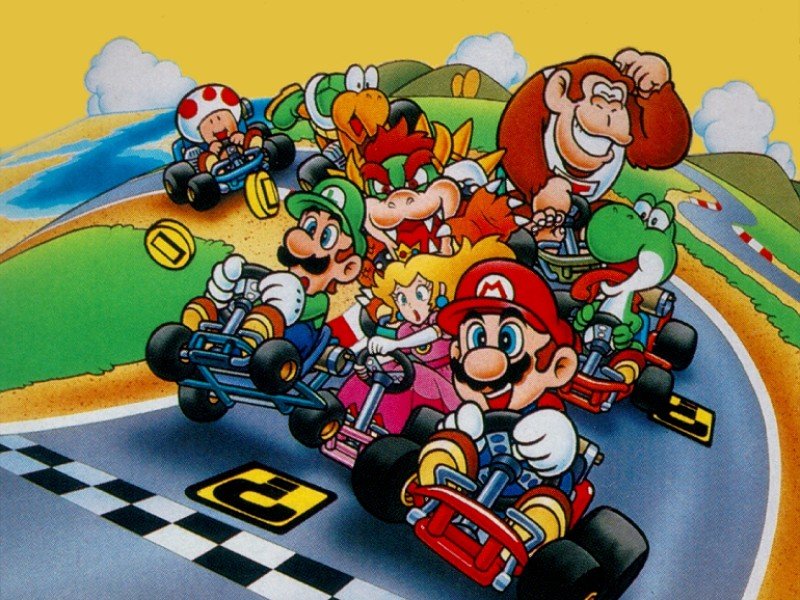


So, for games to draw from this particular strength of film, I think there may be some value to the idea of a persistent stable of "digital actors," each of which maintains a consistent set of innate physical and personality traits unto themselves as individual beings, and who may then be "cast" in a variety of otherwise unrelated games, filling a unique "role" in each. When a new digital actor "debuts," you could get a feel for them in their initial role--their attitude, their features, their style, the archetype they tend to embody; in their next game, they would carry over these innate characteristics, but depict an entirely different in-game character, in a completely different gameworld.
When I think of a game that I'd love to draw digital actors from, Metal Gear Solid 3 is the first that comes to mind. Specifically, The Boss was a wonderfully realized character; she was so well defined that I could see her as an actual person, existing outside a game, which is the quality a digital actor would need to possess. Over the course of MGS3, you really got to know the characters, and I feel that bringing the essence of The Boss to a new game would be a huge draw to players, and give the creatives on the team a really interesting resource to draw from. We know "who" The Boss is, the essence of that person; if the same "actor" were playing a different role, what would she bring to it? Like going into a film knowing you're going to get Pacino, she would lend elements of "herself" to the new character she played. The same could be said of Eva, Volgin, and Ocelot. A completely different game featuring the same ensemble cast would be a very interesting experiment. Games have gotten to the point that their characters can convey unique, endearing, human personalities; who wouldn't want to see another game starring the digital actor of Frank West but without the zombies, or Leon Kennedy but without.. well, the zombies, or Cate Archer pulled out of the 60's, or Sam Fisher pulled out of the catsuit and goggles--the digital actors allowed to be separated from their "signature roles," and to live in new worlds?
It's been done on some level, and long ago-- over the course of 50 years, Osamu Tezuka's comics and animation featured a revolving cast of familiar characters that assumed new roles in each of his different titles. Tezuka's "Star System" did just what's described above-- each character existed unto himself, and could appear in any of Tezuka's titles as an entirely new character, but with a similar personality from role to role. Ochanomizu, Shunsaku Ban, Saruta, Tenma, Acetelyne Lamp, and others became familiar cultural images, apart from any single role they played. They were Tezuka's archetypes, and served as anchors for the readers of new properties in which they appeared.


Many elements of game development seem to suffer from either reinventing the wheel with every new title, or pumping out identical sequels that rely on the exact same elements from year to year. The star power of a beloved "digital actor" might be a useful compromise, a boon to an otherwise original IP from all angles-- the designer's, player's, and marketers' perspectives. Why throw away a perfectly good character you've worked hard to create?
6.03.2007
Actors


6.02.2007
Justification 4
Double Dragon
Arcade / 1987 / Developer: Technos Japan / Publisher: Taito
As a youngster in my early years of gradeschool, I was known to frequently haunt the video arcades of my hometown. Whether it be a dedicated game pit in the mall, the mini-arcade at the local movie theater, or the massive underground Tilt complex in the galleria downtown, I loved the experience of wandering the dark, cavernous spaces lined with dozens of flashing game machines. Playing here was a unique, public experience; you could suddenly be performing for spectators at any moment, or if you came across a multi-player game, you could jump in and instantly be fighting alongside a handful of other guys, working together towards each successive goal.
Though I loved playing many, many different arcade games from this era, Double Dragon remains the one that's stuck with me over the years. The game kicks off with an extremely lean setup, followed by simple, straight-forward action. When the first quarter drops, we are presented with a young woman in a red dress standing in front of a grungy brick building. A gang of men walks up, and their leader, with no warning, slugs her in the stomach and carries her away, slung over his shoulder. As they retreat, the garage door of the building in the background opens to reveal the player character (along with a flashy red Camaro.) The player begins to pursue the kidnappers but is confronted by thugs, and without hesitation ruthlessly lays down the law with his fists, knees and flying kicks. It's all right there in the first 20 seconds. It grabs you and doesn't let go.
Double Dragon stood out from its contemporaries by settings its story in our world, as a bare knuckle conflict between individuals on familiar streets. There was nothing fantastical about it-- no aliens, no lasers, no space ships or goblins or magic spells. Double Dragon was about men, in a city, fighting it out for the sake of the woman imperiled. It was something more visceral than the abstractions of Defender, Pac-Man or Galaga; it was something to identify with, and live vicariously through. As a kid who didn't get along with his classmates much, I'm sure for me it had a strong quality of playing out physical aggressions in a way I never could in real life-- my resentment or anger towards bullies in school could be easily superimposed over the power fantasy of being Billy Lee, grinding thug after thug into the pavement. I have to recognize this part of the intrinsic value the game held for me at the time, even though it's not the noblest reason to enjoy a game.
Regardless of its connection to a certain stage in my life, a time when I would beg my parents to drive me to the arcade just so I could play through Double Dragon again on a fresh five-dollar bill, I legitimately enjoy the game itself to this day, and feel that it's held up as the pinnacle of the pure 2D brawler genre. It's not muddled by extraneous features or a fantastical setting. It's still fun and quick to play through, as I do every so often on MAME, or most recently on the arcade-perfect HD port released over Xbox Live Arcade.
The rawness and immediacy of its setting and action haven't dulled in the least over the years; Double Dragon defined the high watermark for these qualities in games early on. The only true, modern successor has been Rockstar's The Warriors, an homage simultaneously to the cult classic film and the old-school arcade brawler. This is clear enough from the action of the game proper, but it's spelled out explicitly once you complete the main campaign and unlock "Armies of the Night," an arcade machine that appears in the Warriors' hideout. The minigame is a loving remake of the original Double Dragon, as evidenced by its opening moments, and the sidescrolling street fights that follow. Rockstar Toronto's affection for their source material really showed through in every aspect of the final product.
It's nice to see such talented people carrying the torch for one of my all-time favorite games.
5.30.2007
Path
I've come to a conclusion about level design philosophy that's probably elementary knowledge for someone, say, studying game design in college, but it just congealed for me during my stint at TimeGate. Even when building a level that only provides the player with a strictly linear path, the designer should build the path through the place, not build the place around the path. It's about contrivance and cohesiveness.
I think that there's a natural inclination when laying out a linear shooter level to sketch an 'interesting,' abstract path first, then rationalize it by building out the appropriate geometry around it. In my experience, this tends to lead to spaces that feel very contrived and 'gamey.' Places built around a path are disconnected from a sense of purpose-- where is this curved hallway supposed to lead? Why do these storerooms feed into one another like a string of pearls? Why would they make people in this facility go up a series of ramps and catwalks to exit this room? Why is the layout of this place so convoluted?
I believe that the superior approach is to build a place first--a cohesive, functional space, with a purpose--then define a path through it by strategically restricting the player's movement. If it's a factory setting, build a small complex of storerooms, packing floors and shipping bays in an open structure that could simply be a place of its own, then start blocking off hallways, locking doors, collapsing staircases, and so forth to remove all means of egress that conflict with your chosen gameplay path through the space.
Hereby, the overall space inherently makes sense, while still allowing the designer to have a strong hand in leading the player. No part of the built space, and therefore valuable time, need be wasted-- the player can still be given controlled access to each room; or if a room isn't visited, it is at least visible, understood by the player as a part of the place he's exploring, showing him that there's more to the gameworld than the little path he's running along.
5.28.2007
Justification 3
Full Throttle
PC / 1995 / Developer & Publisher: Lucasarts Entertainment Company LLC.
In a good game, you can tell a lot by the way the player is introduced to his in-game character. When we take control of Full Throttle's Ben, we find him punching his way out from the inside of a garbage dumpster.
Full Throttle was a point-and-click that didn't pull any of its punches-- bad things happened, people died, and sometimes the solution to the puzzle was just to kick the damn door down. The gameworld was oppressive, dust-choked, and generally unfriendly; the supporting cast ranged from simply duplicitous to outright homicidal. But the game used its terse characterization to make me genuinely care about the sympathetic characters of Ben, Maureen, and old man Corley, from the initial rush of the opening sequence, to the tragic turning point at the end of the first act, to the devastatingly bittersweet ending sequence. Full Throttle told a melancholy tale of a handful of people-- not video game characters, but what felt like real people-- thrown together by fate, irrevocably changed, only to be scattered to the winds again as the sun set over the desert highway. The game had levity, sure, but it also had real gravitas, where almost no other game has.
Full Throttle deserves praise for standing out from the rest of the Lucasarts point-and-clicks. Unlike Day of the Tentacle, Sam & Max Hit the Road, or Monkey Island, Full Throttle manages to be funny without being silly, and to tell a meaningful, human story through the conventions of the genre without ever taking itself over-seriously. It's an incredible balancing act, and in my opinion just about the pinnacle of what a 2D point-and-click could aspire to. I feel lucky to have played a masterpiece like this during my formative years.
5.26.2007
Justification 2
Sam & Max Hit the Road
PC / 1993 / Developer & Publisher: Lucasarts Entertainment Company LLC.
Point-and-click adventure games were my gateway into modern PC gaming, and Hit the Road is my all-time favorite of the genre. Point-and-clicks are largely linear, designer-dictated, and often frustrating. At their best, they make the player feel clever for figuring out their puzzles; at their worst, the player is banging his head against an illogical impediment for days, with no hope but random trial and error to progress. I think that what Hit the Road and the other funny adventures from the period teach is this: make failing fun. Even when I wasn't making progress in Hit the Road, even when I was repeatedly failing as I tried to unlock the next location, the game was constantly feeding me rewards for my input, by way of Sam & Max's humorous remarks. Even when my clicking didn't reward me with tangible progress, I still received something enjoyable-- a funny little quip, a clever description, some non sequitur piece of dialogue I hadn't heard before. The game rewarded the player simply for playing, not just for succeeding.
Hit the Road's tone is something hard to encapsulate simply-- maybe "screwball noir?" It had edge to it and a down-to-earth vibe while dealing with bigfoot, molemen, and celebrity-lookalike vegetables. It boasted hints of reckless nihilism, what with the opening sequence involving a damsel in distress being left to rot, a mad scientist being decapitated, and a time bomb being tossed into a passenger bus, all by a cartoon dog and rabbit. It was the perfect strange, hilarious, out-there world for my 13-year-old self. It didn't talk down to me, and it kept me in stitches from start to finish.
I think Hit the Road is the game I've replayed the most in my life, probably about a dozen times through. I'm glad that the Freelance Police have been resurrected by way of their new episodic releases, and I'm proud to know some of the fine people at Telltale who bring the games to life. I wish I could go back in time and tell my 13-year-old self that one day I'd get the chance to shake Steve Purcell's hand and tell him how much I've appreciated his work over the years. I'm sure I would've been floored.
5.24.2007
Justification 1
Through a link on Gamasutra, I ended up reading the blog of Stuart Roch, a producer at Treyarch. In one post, he wrote up his 10 favorite games of all time , along with a short statement on why each was important to him. On that note, I felt like it might be useful to justify the games I've listed in the "Favorite Games" field of my profile over there. I'm going to split each of mine into a separate post, in the arbitrary order that I initially listed them.
Syndicate
PC / 1993 / Developer: Bullfrog / Publisher: Electronic Arts
Up front, I'll admit the possibility that my esteem for games from this time period might be elevated by nostalgia to some degree; on the other hand, I've played all of these games since their original release, and still, objectively I think, hold them in high regard.
The world of Syndicate is a cyberpunk dystopia. The player is a high-ranking executive in a multinational corporation, tasked with remotely controlling a squad of cybernetically-enhanced field agents to wreak havoc in cities across the world, gaining control of each territory in turn. The goal is complete world domination, the method wanton destruction.
I like the setting, but what I think really stuck with me was the game's structure, and the amount of control the player had over the gameworld. From the outset, the player is presented with the whole globe, and then given the power to conquer it however he chooses. The globe is divided into territories, each of which is represented by a discrete playable space; this playable space is comprised of an open-structure city, into which the player's agents are inserted. The player must then complete specific objectives within each level, by observing the area's physical layout and NPC behavior, formulating a strategy, and executing it using a small but focused set of affordances. The player decides in which order to approach the levels, and must then himself decide how to accomplish the goals in each level, pushing the game's progression forward along the path he's chosen.
It's human-scale tactical conflict in a series of open-structure levels, which generally describes my favorite type of game to this day. That in Syndicate the order of the level progression is also dictated by the player is an added bonus. The rest of what makes the game great are the specifics of the action and the artifice that I won't go into, but for 1993, I'd say that everything about Syndicate was far ahead of its time.
For me personally, leading up a modern-day spiritual successor to Syndicate would be my dream project. It's a game experience which has never been duplicated to this day, and which I believe has enormous potential to be translated into the contemporary game sphere. If only.
5.16.2007
Gamespy
A little bit of cool news: Residential Evil got written up by Gamespy today (at the bottom of this page.) It's nice to get some recognition, especially for the first finished map I ever publicly released. Now both of my F.E.A.R. maps have gotten mentioned on Gamespy, which I hope means they've been played by a lot more people than they would have otherwise. If only I could let those people know that my work will be in TimeGate's next release, but it hasn't even been announced yet. C'est la vie.
To anyone who's downloaded Residential Evil or BENEATH: hope you dig'em!
5.12.2007
Mappings
Sometimes it's fun to think of things in terms of controller mappings. I'm using some device or performing some activity-- how could I map this interface or action onto a standard (or non-standard) game console controller?
One recent example that translated very intuitively was mapping the iPod's interface onto an Xbox 360 controller. I was thinking, what if a character carried an iPod with them ingame, and could use it to choose selections from their custom soundtrack playlists on the fly?
Upon selecting the iPod from his inventory, the player would be presented onscreen with the familiar iPod interface. Luckily, the 360 controller has a layout and array of buttons that translate perfectly to the iPod's interface.
 1) Rotating the left analog stick on the 360 controller maps to sliding your thumb around the touch-sensitive input ring on the iPod. Rotating the stick clockwise and counterclockwise navigates menus and changes volume and other settings, as sliding your thumb clockwise and counterclockwise does on the iPod input ring.
2) Clicking in the left analog stick ("L3") maps to clicking the button at the center of the input ring on the iPod, to confirm selections.
3) The four face buttons on the 360 controller map to clicking the four input symbols on the face of the iPod input ring. Y maps to Menu, X maps to Back, B maps to Forward, and A maps to Play/Pause.
I think it works out particularly simply and nicely. I'm not sure if this exact thing has been done in a game before-- I think that in Mark Ecko's Gettin' Up: Contents Under Pressure and in Saints Row the player character has an iPod and can use it to choose the in-game music track. Were they presented in such a way as to map the player's direct input onto the iPod interface itself? I could find out, but suffice it to say I came up with this mapping in a vacuum.
I find this to be a nice design exercise, especially with increased complexity (for instance, attempting to map classic mouse-driven PC games onto a console interface, or dreaming up a port of a current game from one system to another with a completely different interface.) Try it sometime.
5.03.2007
Group 2
I think my last post deserves a little more time.
When I attended this year's GDC, I made sure to see Clint Hocking's presentation, "Exploration: From Systems to Spaces to Self." At present, he's one of the guys most publicly engaged with progressive single-player narrative game theory, emergent systems, and the whole Looking Glass legacy. His talk was, well, an exploration of the ways that players explore games, and thereby explore their own character through their in-game actions.
One example in his talk was the game Spider-Man 2. As I understood it, he argued that while the game hands the player the palette of Spider-Man's physical abilities to explore the physical space of New York City, the player is given no tools to explore the character of what makes Spider-Man a hero instead of just "an asshole in red tights." He noted the backstory of Spider-Man: that when Peter Parker initially gained his super powers, he just used them to win wrestling matches, until the day that he witnessed a robbery and didn't bother using his powers to stop it. That robber went on to kill Parker's beloved Uncle Ben, teaching Parker that "with great power comes great responsibility." The lesson is imparted by a loved one's being lost forever due to Parker's own decisions, his own inaction. From that point forward, Parker would be motivated to use his powers to prevent further tragedies.
The player of Spider-Man 2 has experienced no such personal tragedy, and has no motivation to much more than dicking around with Spider-Man's powers, beating up random criminals and returning errant balloons to gain points. It's the "what" of Spider-Man without the "why."
As I understood his presentation, Hocking went on to consider how one might build the intended characterizations and emotional responses in the player through the play of the game itself-- if you were going to build a game about Muhammad Ali, how to convey the conflict between his public persona and physical power, and how it would affect the following fights. And presumably, if you were going to build a Spider-Man game, how to convey the sense of responsibility through the play's mechanics and dynamics, though he didn't expand on how that might be done.
Immediately after the presentation ended, I began talking it over with a couple colleagues of mine. The stance I took was that, for the player to be legitimately invested in the theme of responsibility, the events that imparted the message would have to be personally meaningful to the individual player. They couldn't be concretely authored by the designer-- if Uncle Ben were going to be killed every single time you played this theoretical Spider-Man game, the event would be just as inevitable, and therefore just as meaningless, as if it happened in a cutscene. To truly affect the player, the designer can make his presence felt no further than creating and to some degree encouraging the possibility of Uncle Ben dying due to the player's own inaction.
Perhaps in this theoretical Spider-Man game, there are constants: the player is Peter Parker, post-bite, with his powers. He lives at the home of his Uncle Ben and Aunt Mae, and must return there frequently to sleep, eat, etc., and meanwhile become attached to his Aunt and Uncle through their interactions at the house. Among other things in the world, there are Robber NPCs with the goalset to rob other NPCs or banks, armored cars, etc. The Robber NPC type might also kill innocent civilians.
Now with just this base set of actors, we have the very barest possibility of the player witnessing a robber rob someone, fail to stop him, and that robber going on to kill the player's Uncle Ben. The possibility is there but extremely slight; only the rarest player would cease being an asshole in red tights through this series of events.
This is where tracking metrics come in. For one, Robber NPCs might tend to be much more likely to perform their robbery action when the player is nearby. Furthermore, perhaps each spawned Robber NPC maintains a record of whether or not he has entered the line of sight of the player while he's performing his robbery action, and from what distance and for how long. The Robber also records whether or not the player has deployed an attack at him at any point during or following the robbery action. Hereby, the system can fairly well confirm whether the player has duly witnessed a particular Robber perform his robbery action. The system can also record whether the player attempted to stop the Robber after witnessing his robbery action.
When it's confirmed that the player has witnessed a robbery and intentionally let the Robber go, that particular Robber NPC has a high probability of receiving the goal to kill the player's Uncle Ben. This wouldn't have to be as transparent as it seems-- the Robber wouldn't necessarily make a bee line for the player's house and shoot his uncle for no reason. When the Robber receives the goal to kill Uncle Ben, Uncle Ben might receive the goal to go into town to buy something, causing the Robber and Uncle Ben to meet in a plausible location for the act to occur.
Hereby, the game would set the possibilities in motion for a figure the player had grown attached to being lost through the player's own inaction, motivated by the dynamic events ingame instead of a pre-plotted series of scripted events. The metrics and goal systems would greatly raise the probability of the intended sequence of events occuring, but they would only occur when the player's actions spurred them to do so.
This would also bring up the interesting possibility of the game finding a player that had come to the table with the lesson of personal responsibility already learned, and acted with great diligence from square one without being prompted so by the events of the game. A player who stopped every robbery he witnessed would never lose his Uncle Ben because, for the purposes of the game's theme, he wouldn't need to. He would already be acting like Spider-Man.
I guess in large part the point of this post is to argue that worlds and narrative driven by dynamic AI actors needn't entirely preclude the idea of designer-intended events or story arcs, and could in fact make the authored elements more meaningful when received through the player's decisions and actions.
4.27.2007
Group
When we were in the hotel in Austin, I caught part of a reality TV show called Work Out. Like most reality TV, it's an ensemble drama about a diverse group of personalities working toward a common goal, in this case the founder and staff of a high-class fitness center trying to run a successful business. The intrigue comes from the personal and cultural friction between the conflicting personalities types within the group, and to this end as many divergent characters as possible are brought together to put on a show. In Work Out, we're presented with the cast in such a way that their most outward traits are immediately caricatured: there's the tough, assertive lesbian entrepeneur and her crew of trainers composed of, as I remember them being portrayed, the 'funny-gay' guy, the 'butch-gay' guy, the Texan guy, the slutty girl, the vampy Posh Spice girl, the ex-Marine black guy, and possibly a couple of other less immediately-exaggerated members of the team. The top dog of the operation pushes them all to give 110%, and sparks fly; the minute-to-minute plot events of any given episode are an afterthought compared to the drama of the personality dynamics between individual group members. When it comes to games, I'm very interested in single-player, character-based experiences. This isn't to be confused with my being "into games for the stories;" no, I normally find the author-dictated plotting of video games to be functional at best, regrettable at worst, but useful primarily for motivating the player's actions forward through the gamespace. However, I think that games can be extremely successful at presenting memorable supporting characters to the player, and allowing him to form strong bonds with these characters over the course of the experience. In almost any character-based game you care to mention, I can almost guarantee that three elements stand out above all else: the player's own actions (the "what,") the places the player visited (the "where,") and the people the player interacted with (the "who.") Coming in a far distant fourth might be the backstory and authored plot events themselves-- the specifics of the "why."
I'll take for example here No One Lives Forever 2. What do I remember about that game? First would be the "who"-- Cate Archer, Magnus Armstrong, the world-weary second-in-command at UNITY, the wheelchair-bound Dimitri, the foppish Director of H.A.R.M., and other colorful agents. I remember the "where"-- the UNITY offices, a mime school, India, Japan, Siberia, an undersea base, an artificial volcano, Akron Ohio. And the "what"-- shooting, sneaking, deploying clever devices to thwart foes, rifling through secret documents. But besides the broad strokes, I'm more hard-pressed to remember the "why"-- I know that H.A.R.M. has something to do with creating super soldiers, and Cate Archer has to stop them. This somehow involves a lot of globetrotting to exotic locales, killing bad guys and stealing interoffice memos. Eventually Archer defeats her foes at H.A.R.M. and saves the day. How about another example? Metal Gear Solid 3. My first touchstone again is the "who"-- the fresh but tough Solid Snake, the support team of Major Tom and Para Medic back at the base, The Boss (The Boss!!) and her eccentric Cobras-- The Pain, The Fear, The End, The Fury, and The Sorrow; the heartless soviet Volkov, a young and naive Ocelot, Eva the double agent, and the Russian scientist who just wanted to build space rockets. The "where" is a series of jungles and covert facilities within Russia proper, mainly lush forested areas and concrete bunkers, perfect for infiltration. And the "what" is the meat of the stealth genre-- crawling, sidling along walls, creeping up behind enemies and interrogating them, firing silenced pistols, and hiding under cardboard boxes. Again the specifics of the "why" are harder to recall. Volkov is attempting to harness the power of Metal Ray, a supertank capable of firing an ICBM. He's employed Boss and the Cobras to help him, and Snake must stop his evil plan. So you meet the "who," do the "what" in the "where," and then beat the game. The noble and complex character of The Boss, the outlandish affectations of the Cobras, the duplicity of Eva, the amateurism and enthusiasm of a young Ocelot, and the menacing demeanor of Volkov are what leave the greatest lasting impression of any of the narrative elements, far before what order the events of the plot occured in or even what exactly they were at all. Games like this aren't short-- we spend a lot of time with these characters, get to know them, and form strong memories of just what sort of people they are. More than anything but the actual play mechanics and dynamics themselves, the strength of the supporting cast is what sustains the player of a narrative game; they are the game's lifeblood, the human conduit through which the player connects with the rest of the experience.
 That said, I think that the majority of games suffer from the problem of integration. Like most overt narrative elements in games, interaction between and characterization of the PC and members of his supporting cast are kept entirely separate from the interactive elements of the experience; the player performs the "what," then is passively shown the "who" in a non-interactive scene. The potential as I see it lies in integrating the drama of the group dynamics into the central play experience itself, making it a part of the possibility space.
The drama of group dynamics is central to more significant fiction than reality TV, and demonstrates what aspects might be useful to games. For instance, I recently watched Oliver Stone's Platoon for the first time. Here is a story that's fueled not by the specific plot points of the timeline, but by the pressures of the setting and a diverse group of characters with conflicting morals. The young, naive Charlie Sheen character, the "player character" as it would be, is the viewer's link to the experience; we lose our innocence along with him. The rest of the drama blooms from the squad bending under the pressure of war: Barnes' frighteningly calculated wielding of death, DaFoe's warm and compassionate manner with Sheen and his desire to reign in Barnes, the gung-ho sociopath on the squad who wants to "do'em all-- do the whole village," their well-meaning but ineffectual C.O., and the rest of the characters who just want to get home to their sweethearts.
Central scenes of the film revolve around two conflicting approaches to war, as embodied by the strongest personalities in the squad. Barnes has been turned into a machine, focused on his objective regardless of the human suffering it causes. DaFoe's character is the liberal voice of reason that tries to hold Barnes back and do things "the right way," morally and according to protocol. Sheen's character lies in between, an observer more often than not but a mediator when emboldened by DaFoe, as in the scene where Sheen drives away a group of GI's who are attempting to rape a villager. These three characters might embody the id, superego and ego as did the three Sellers in Dr. Strangelove; they are the three forces pulling all the characters' meta-actions back and forth across the line from humanity to animalism. More than any objective to "clear X village for VC supplies" or "get to the checkpoint," the events generated through the squad's group dynamics under pressure are themselves the drama. Thinking of it this way, grouping the player of a video game with NPCs of strong character types that hold their own goalsets and carry them out according to their AI desires would be one approach to generating dynamic narrative through the group's and player's actions themselves-- how the group of NPCs interacts between themselves, the world, and the player. If Platoon were a game, and a well-defined Barnes and DaFoe (I should really look up his character's name) were grouped with the player, and then the group was given an objective to search a village for hidden weapons, the drama would follow based on the actions they dynamically performed in reaction to the obstacles in the gameworld that they happened to encounter while trying to achieve that goal. Barnes might tend to kill civilians who tried to impede his goal, while DaFoe might tend to block the killing of civilians. This might affect the allegiance of Barnes to DaFoe; if Barnes' allegiance to DaFoe dropped from "friendly" to "threat," Barnes might gain the internal goal of isolating DaFoe from witnesses and killing him. This might be true of any GI character that became a threat to Barnes, including the player. The player's decisions, based on the NPCs' actions, which in turn would be based on their own ingrained personalities and received stimuli from the gameworld, would itself define the "what" and "why" of the gameplay experience.
There have been games that play with the idea of dynamic squad interactions. I'm thinking of Bioware's games such as Baldur's Gate II and KOTOR, or the Jagged Alliance games. These games feature interpersonal dynamics between individual group members that occur during and at times tangibly affect gameplay-- mixing certain squad members in Jagged Alliance can raise or lower the morale of your squad, causing some members to perform better or to desert entirely. However, as far as I know it's as yet unheard of for the NPCs' desire sets and available actions to dynamically define the meat of the narrative and the gameplay. I would love to see a game where the concrete authored narrative is restricted to only the broadest objectives, and the drama and tension grew from the meaningful interactions between the human player, the richly-defined cast of NPCs, and the gameworld that they shared.